
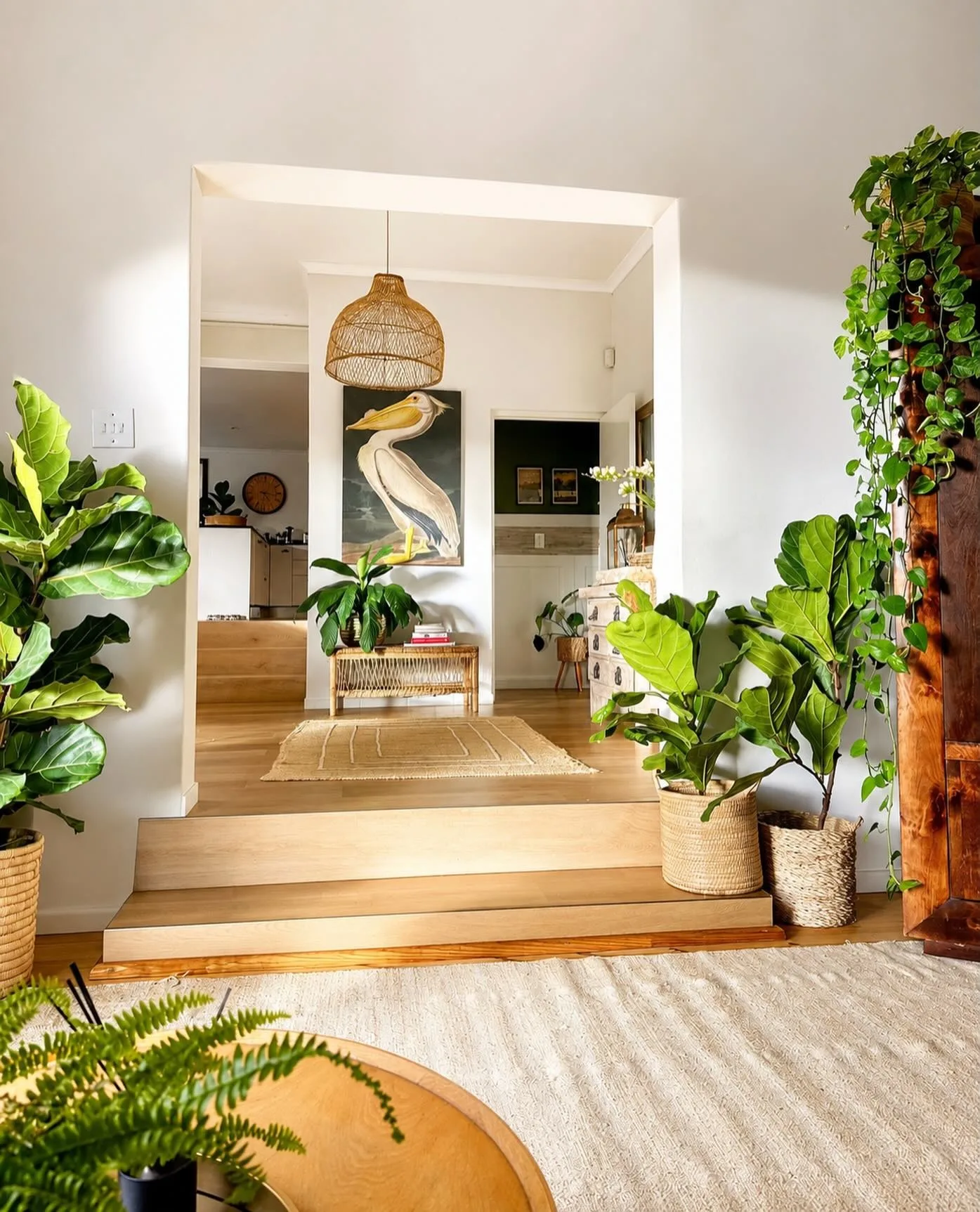
Almost every home we stage in Cape Town is still being lived in. There are school bags in the hallway, a dog basket in the lounge and someone's home office set up on the dining table. The advice you find online mostly assumes an empty house and a removals van — which is no help at all when you've still got six weeks of ordinary life to get through before transfer.
So this is the version we actually use. Home staging when you're still in the house is less about stripping everything out and more about deciding, room by room, what stays visible and what quietly goes away.
Start with the rooms buyers decide in
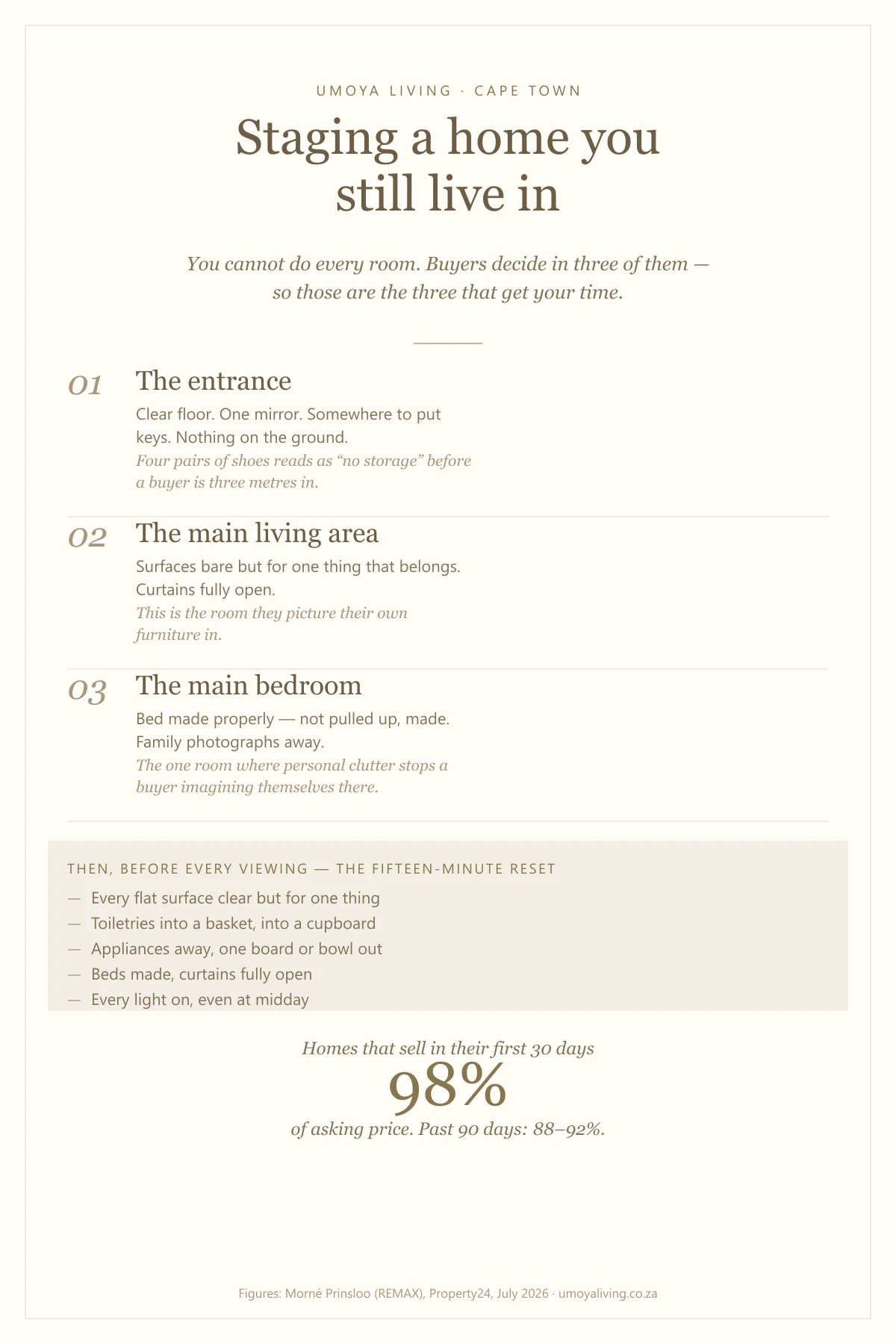
Buyers make up their minds in three spaces: the entrance, the main living area and the main bedroom. If your time and energy are limited — and they always are when you're living through a sale — put everything into those three and let the rest simply be tidy. Writing on Property24, Lew Geffen Sotheby's co-principal Claude McKirby puts it more starkly: buyers often make up their minds about a property within the first few minutes of seeing it.
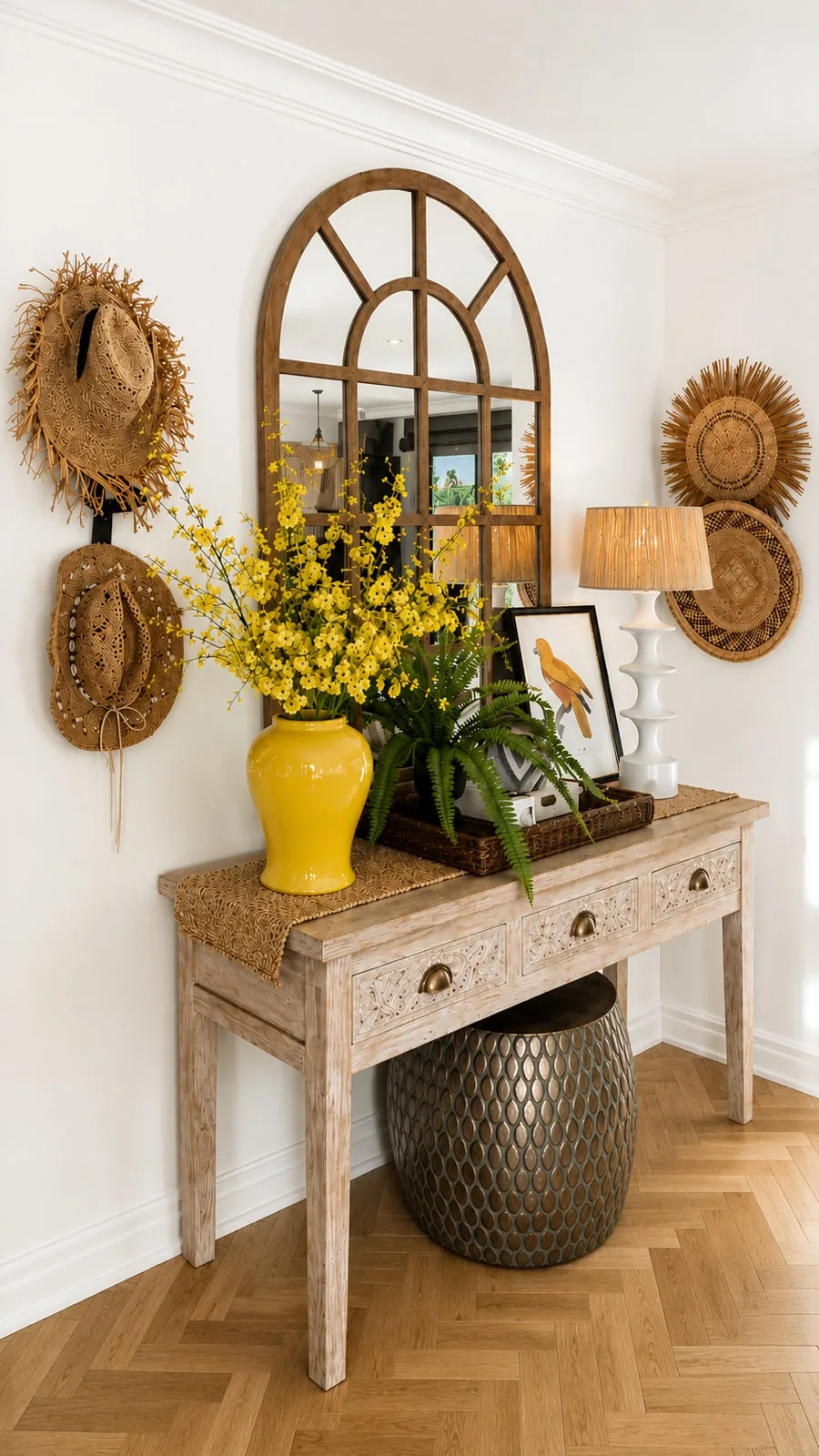
The entrance does the most work for the least effort. A clear floor, one mirror, somewhere to put keys, and nothing on the ground. That's genuinely it. A hallway with four pairs of shoes in it reads as "no storage" before a buyer has walked three metres into the house.
Pack early, and pack properly
You're moving anyway. Packing thirty percent of your belongings now isn't wasted effort — it's the first day of a job you'll have to do regardless. We usually start with books, off-season clothing, the good crockery, and anything sentimental that isn't doing visual work in the room.
The part people get wrong is where the boxes go. Not the garage, and not stacked in a spare room — buyers open both. If you can, get them off-site: a friend's place, or self-storage for the two or three months it takes.
Leave enough of yourself in it
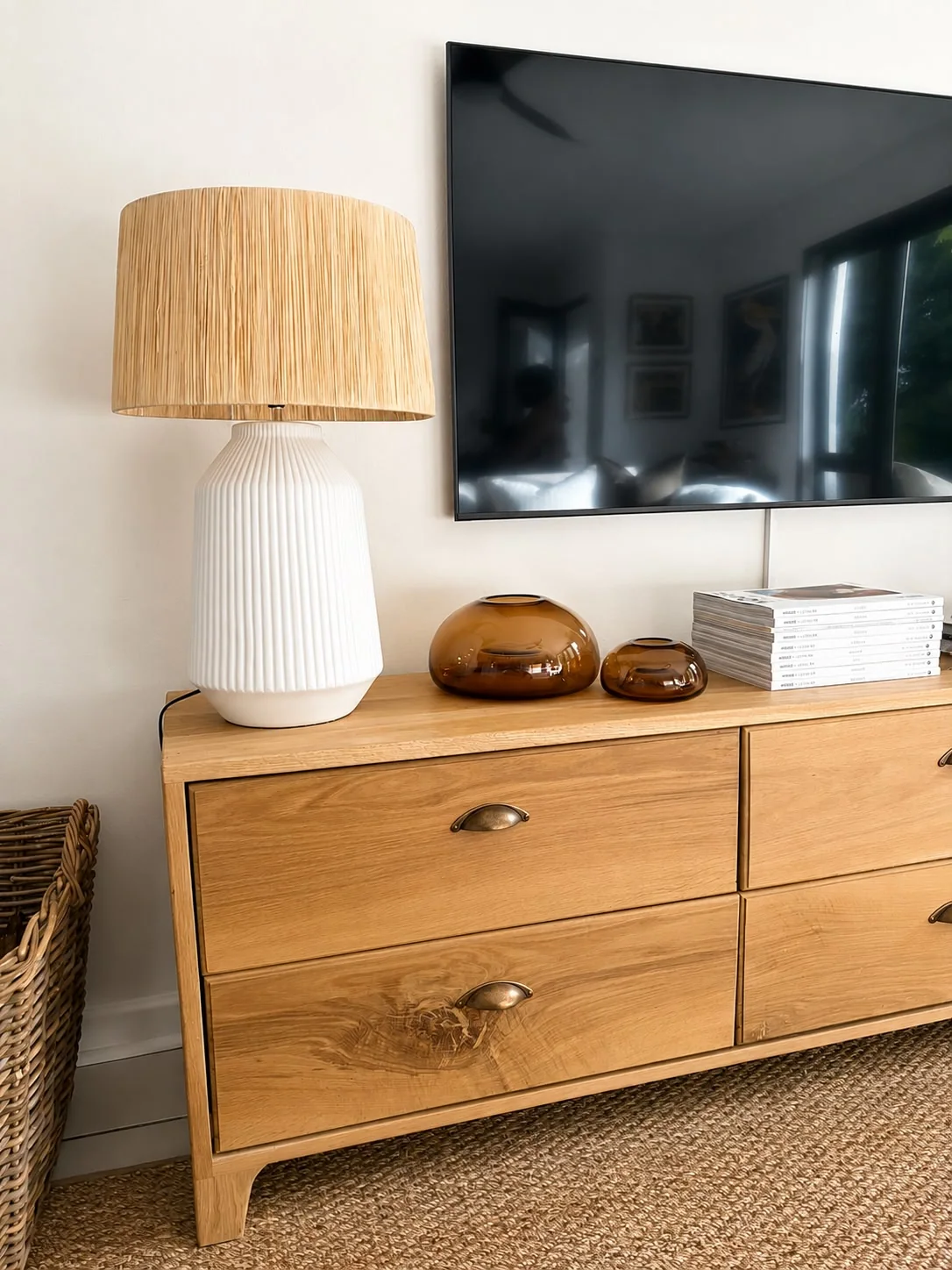
There's a stubborn myth that a home has to be stripped back to a blank white box. We've never found that to be true, and it makes a house you're living in miserable. A home that feels loved photographs better and shows better than one that feels evacuated. Private Property makes the same point from the other direction: properties that are empty tend to be much harder to sell, and often sit on the market for longer. Still being in the house is not the disadvantage sellers assume it is.
Depersonalising isn't erasing you. It's removing the things that make a buyer feel like a guest in someone else's life.
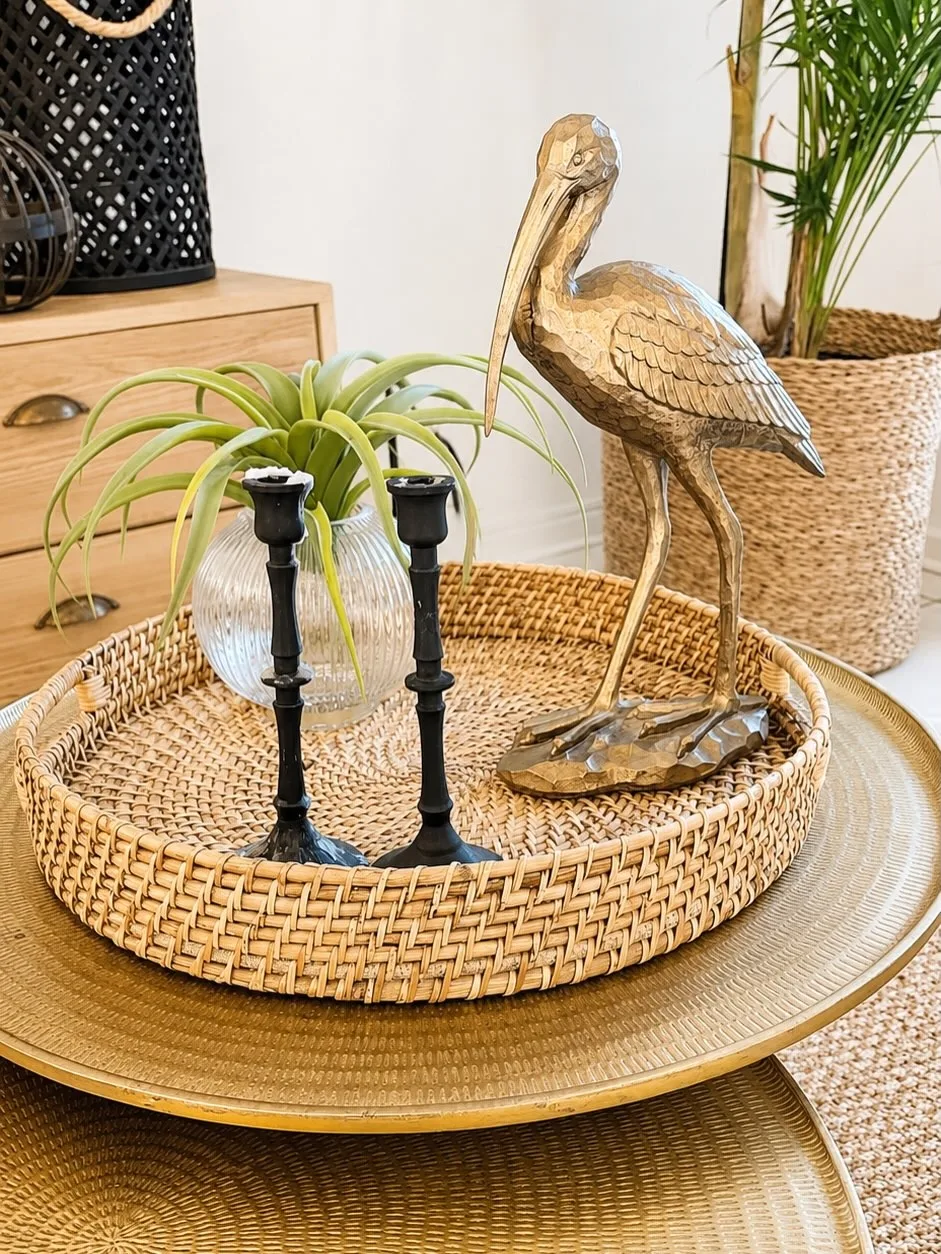
Practically, that means: family photographs down, because they're the one thing that stops a buyer imagining themselves there. Everything else — books, art, a well-worn armchair, plants — can stay, and usually should. This is the same layered, collected approach we brought to Ibis Cottage, just applied with a sale in mind.
The daily reset
Once the house is staged, keeping it that way is a fifteen-minute routine rather than a full clean before every viewing. Ours looks like this:
- Every flat surface clear except the one thing that belongs there
- Bathroom: toiletries into a basket, into a cupboard, fresh towels out
- Kitchen: appliances away, one board or bowl left out, bin emptied
- Beds made properly — not pulled up, made
- Curtains fully open, every light on, even at midday
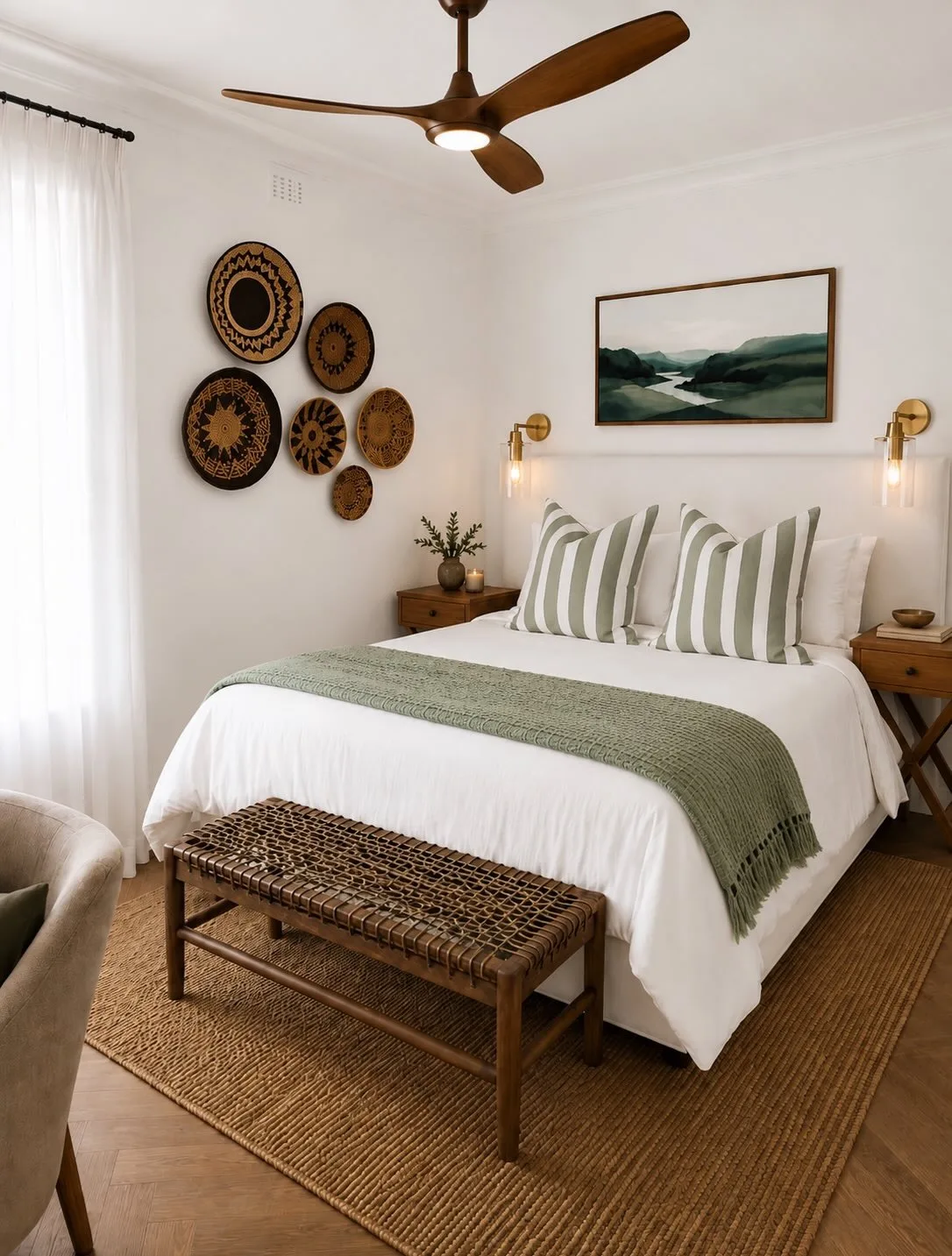
Keep a basket in each main room. Two minutes before a viewing, everything that's crept back out goes into the basket and the basket goes into the boot of the car. It's not elegant, but it's what makes living in a staged house survivable.
Light, and the Cape Town summer
Light is the single biggest lever, and it's free. Clean the windows before the photographer comes — the south-easter leaves a film on the glass that you stop noticing after a week and that flattens every photograph. REMAX's Morné Prinsloo, writing on Property24, reduces the whole problem to five words: dark rooms read as small rooms. Schedule viewings for when each room is at its best rather than whatever's convenient: a west-facing lounge shows beautifully at four in the afternoon and reads as gloomy at nine in the morning.

In summer, get the house cool before anyone arrives. Open it up early, close it against the worst of the afternoon, and open it again before a late viewing. A buyer who is uncomfortably hot will not linger, and lingering is the whole point.
When to bring someone in
You can do most of this yourself. Where a stylist earns their fee is the part that's hardest from inside your own home — seeing it as a stranger does. We walk in without any of the memory you have of the place, which is precisely why we can tell you that the thing you love most in the lounge is the thing that has to go.
If you're preparing a home for the market and you'd like a second pair of eyes on it, tell us about the house and we'll take it from there.
Frequently asked questions
Can you live in your house while you're selling it?
Yes — most Cape Town homes are sold with the family still in them. It takes a pared-back version of your normal life: fewer things on show, boxes off-site, and a short reset routine before each viewing.
What devalues a house the most?
In our experience it is rarely one big thing. It is dark rooms, visible clutter and tired paint stacking up, so a buyer reads the whole house as neglected and starts pricing in work that isn't actually needed.
What is the most common reason a property fails to sell?
Usually price, but presentation runs a close second. A home that photographs badly gets fewer viewings, and fewer viewings means fewer offers — which is then read as the market rejecting the price.