
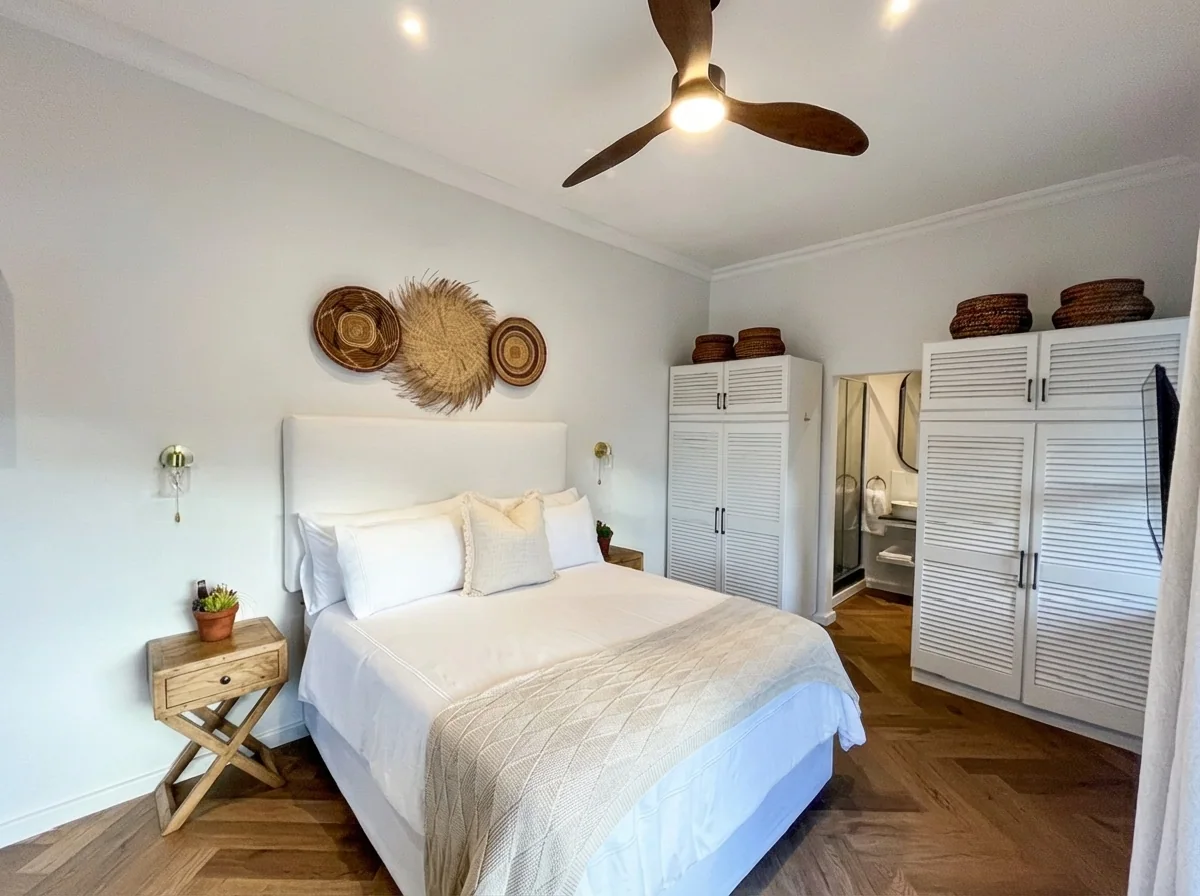
Nobody needs telling to declutter before selling a house. Every agent says it, and they are right. What people actually ask us is where to start, and what to do with it all once it is out of the room. In Cape Town the second question has a better answer than most sellers realise: the City's drop-off sites take recyclables, and bulky garage and garden waste, from residents for free.
This note covers both halves. The order we work in, which is the order buyers look in, and where the things you are not keeping end up. If you are still living in the house while it is on the market, read it alongside our notes on staging a home you live in, because decluttering is where that starts.
Three piles, decided once
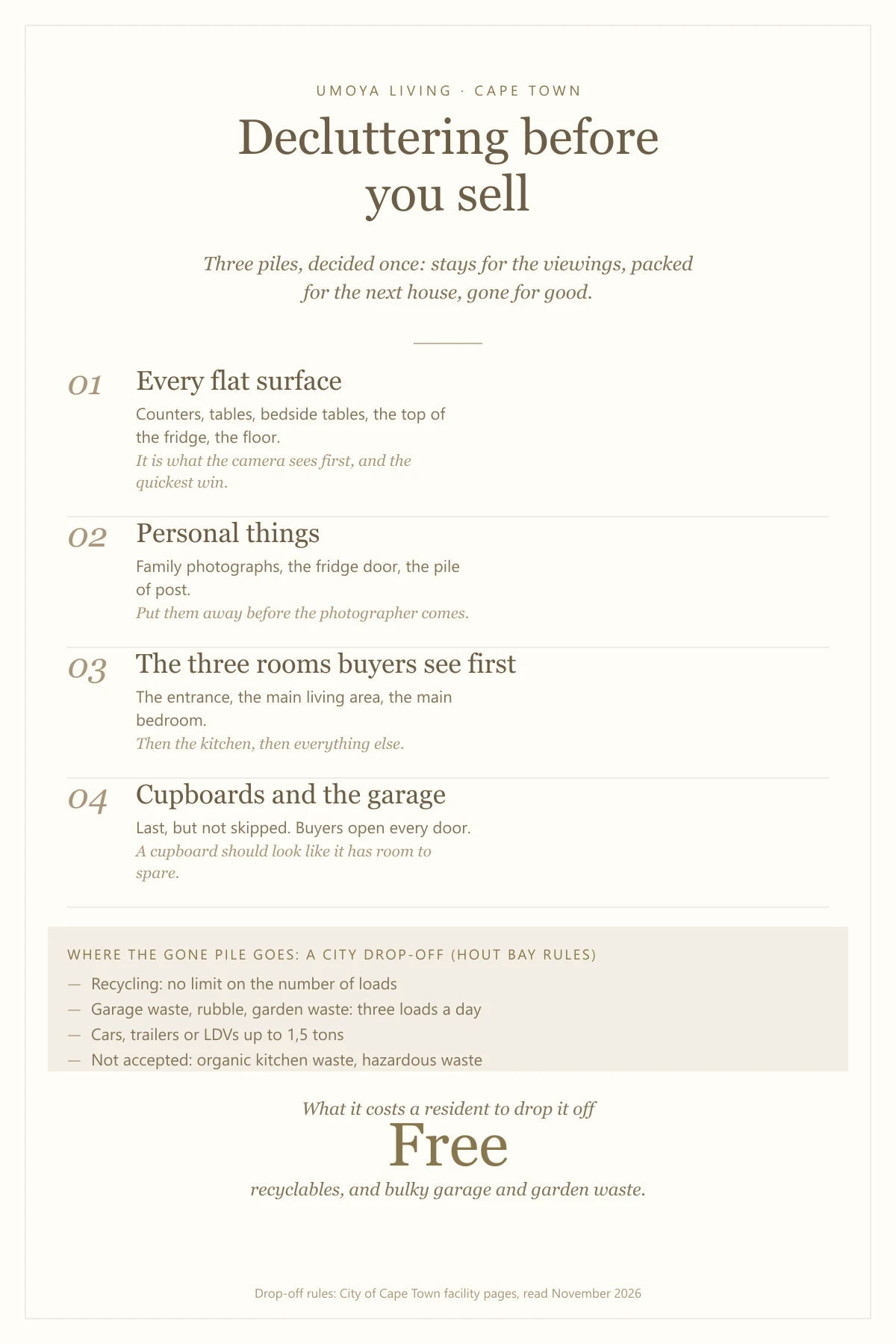
Before you fill a single box, set up three piles. The first stays: the furniture, art and few good objects the house needs for viewings. The second is packed: things you are keeping for the next house, boxed, labelled and out of the way. The third is gone: sold, given away, recycled or dropped off.
The trap is a fourth pile called "decide later". It ends up in the spare room or the garage, and buyers open both. A 2013 Private Property guide put it bluntly:
Don't just pack away your clutter and put it in storage, which only takes your problem on to your next home.
The same piece adds: Dispose of, donate or recycle as you go. We would keep one exception. The packed pile is fine, as long as it holds things you will actually unpack at the other end. If a box has stayed sealed since your last move, it belongs in the gone pile.
What to declutter first: what the camera sees
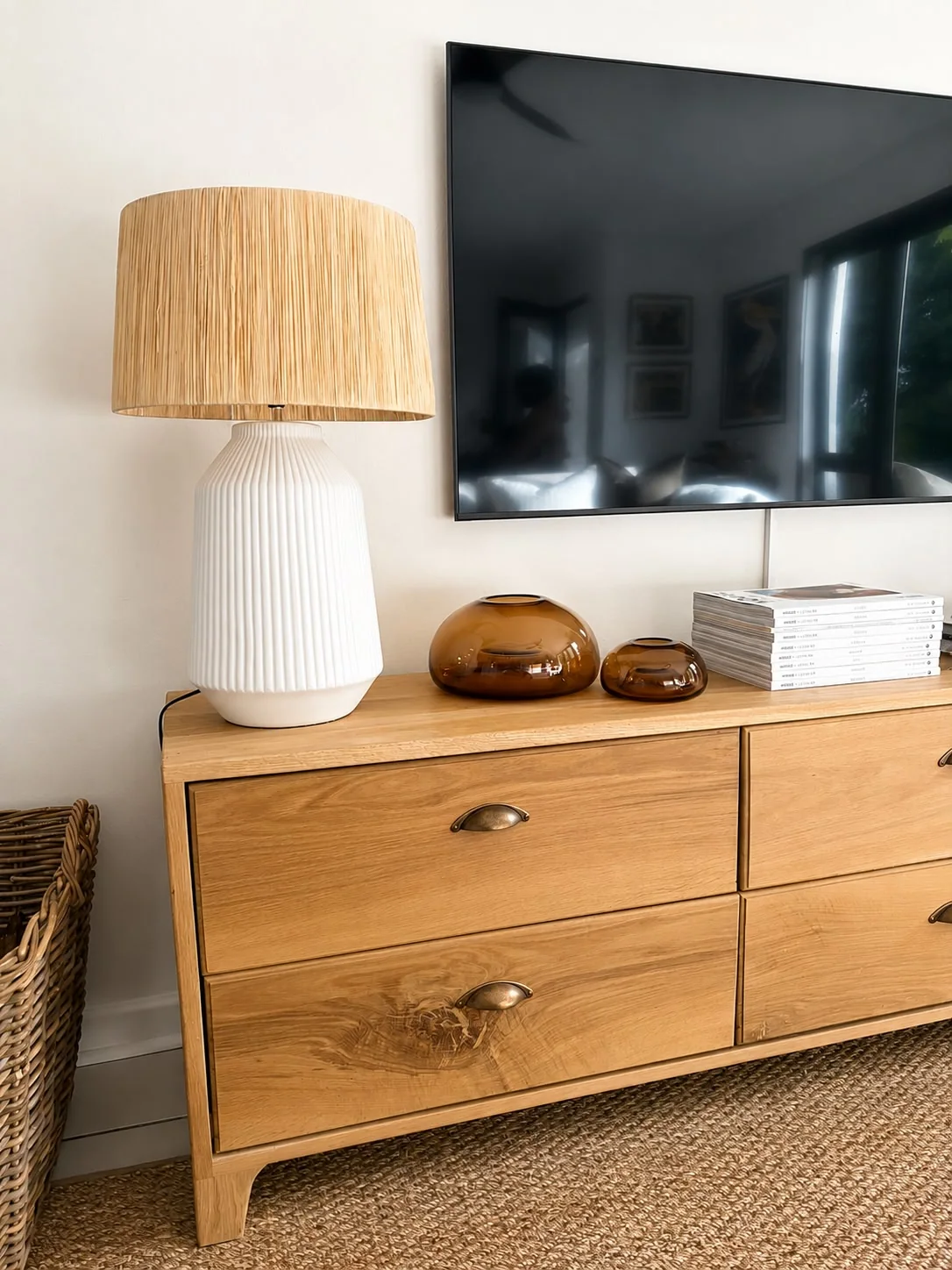
Start with every flat surface. Kitchen counters, the dining table, the coffee table, bedside tables, the top of the fridge and the floor. Surfaces are the first thing a listing photograph shows, and clearing them takes an afternoon rather than a month.
The kitchen is where most of it collects. Pam Golding Properties' 2020 guide for sellers is specific about it: In the kitchen, for example, pack away appliances to display attractive granite tops and cupboards and to create sufficient workspace. The kettle can stay. The toaster, the blender and the air fryer go into a cupboard or the packed pile.
Personal things come next. Family photographs, certificates, the fridge door, children's artwork and the pile of post by the front door. The same Pam Golding piece passes on advice from Samantha Nel, its branch manager for the Southern Suburbs: start putting away personal items so that they will not appear in photographs or virtual tours. That is the deadline that matters. Get them away before the photographer arrives, not before the first viewing.
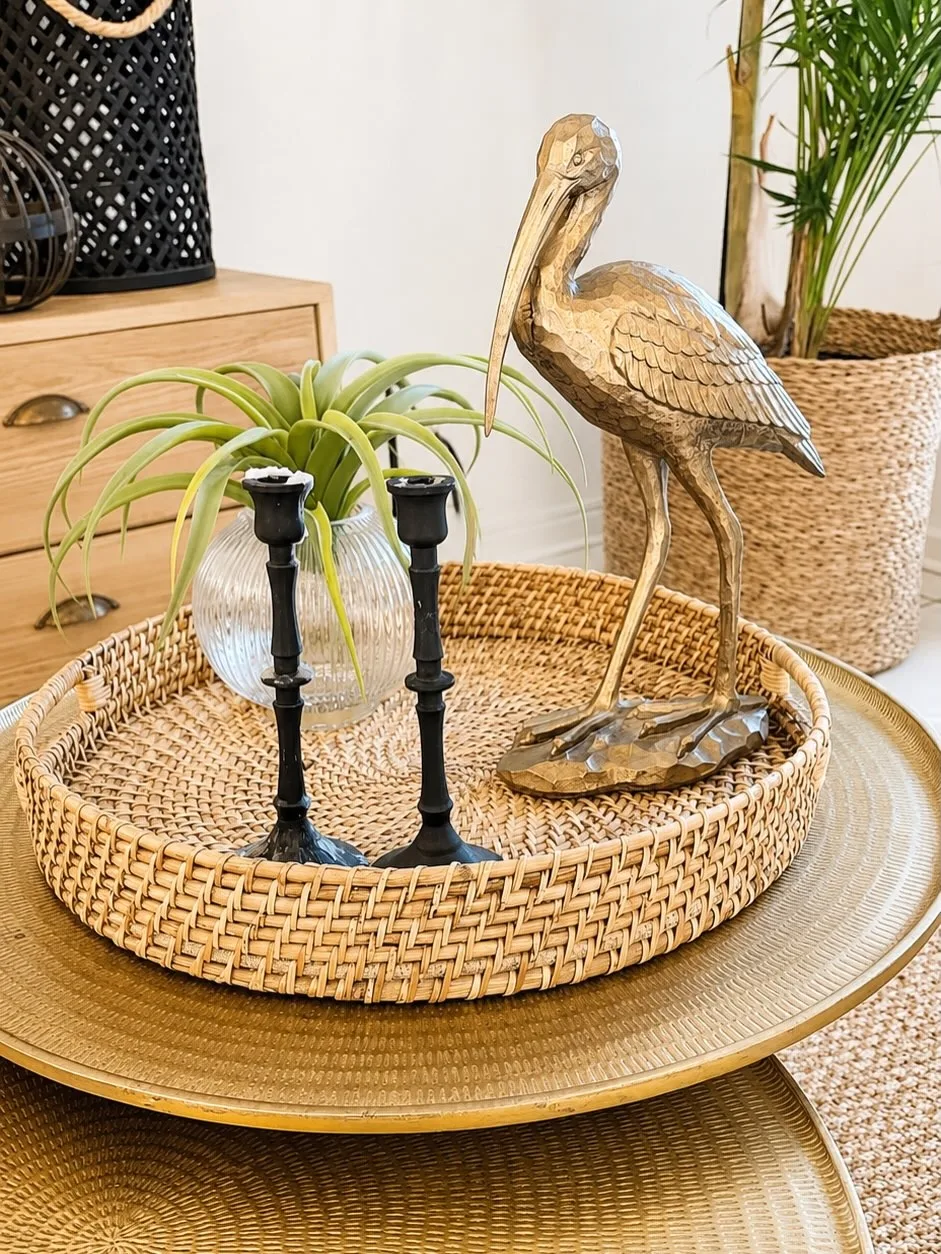
Small things that are worth keeping out are easier to live with gathered together. Three or four objects on one tray read as a single thing. Spread across a table, the same objects read as clutter.
Which room should I declutter first?
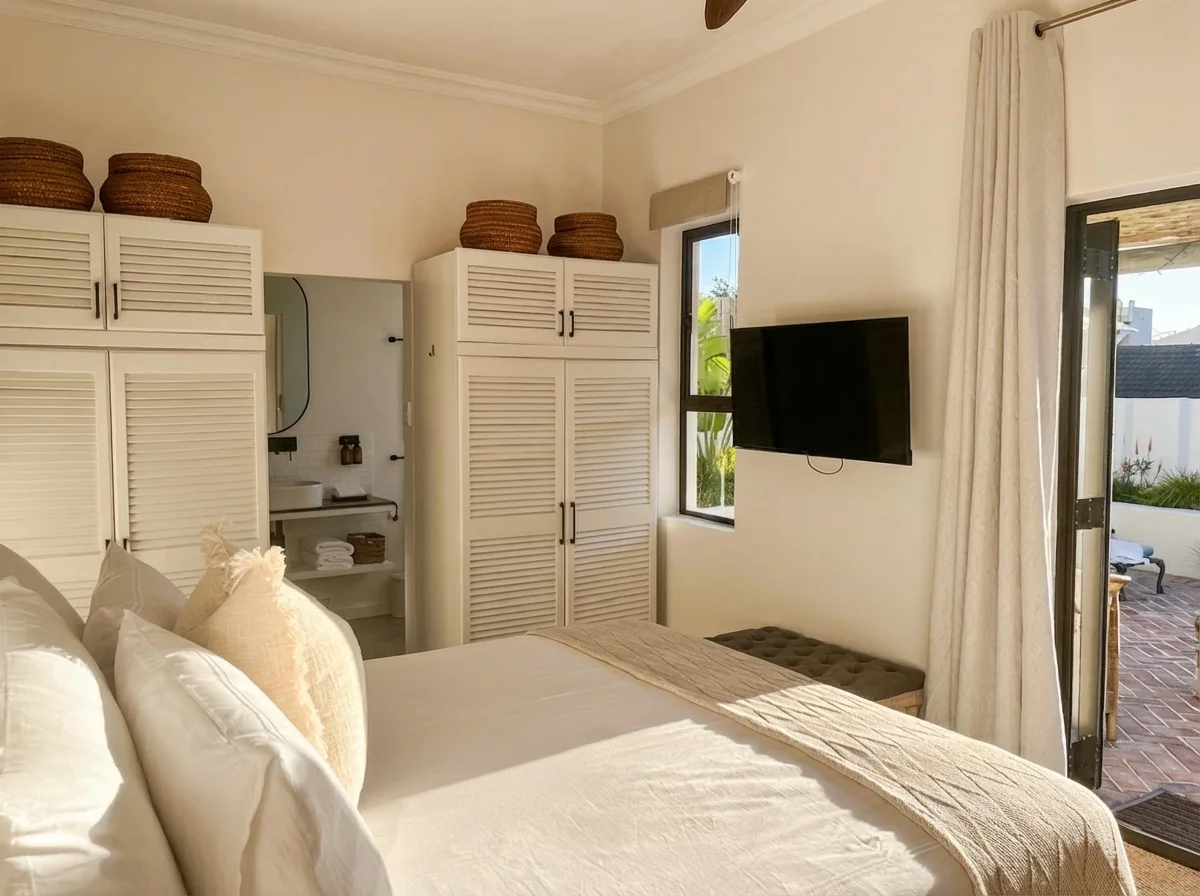
The entrance, then the main living area, then the main bedroom. That is the order a buyer meets the house in, and in our experience those three rooms decide most viewings. The kitchen comes next, then the bathrooms, then everything else.
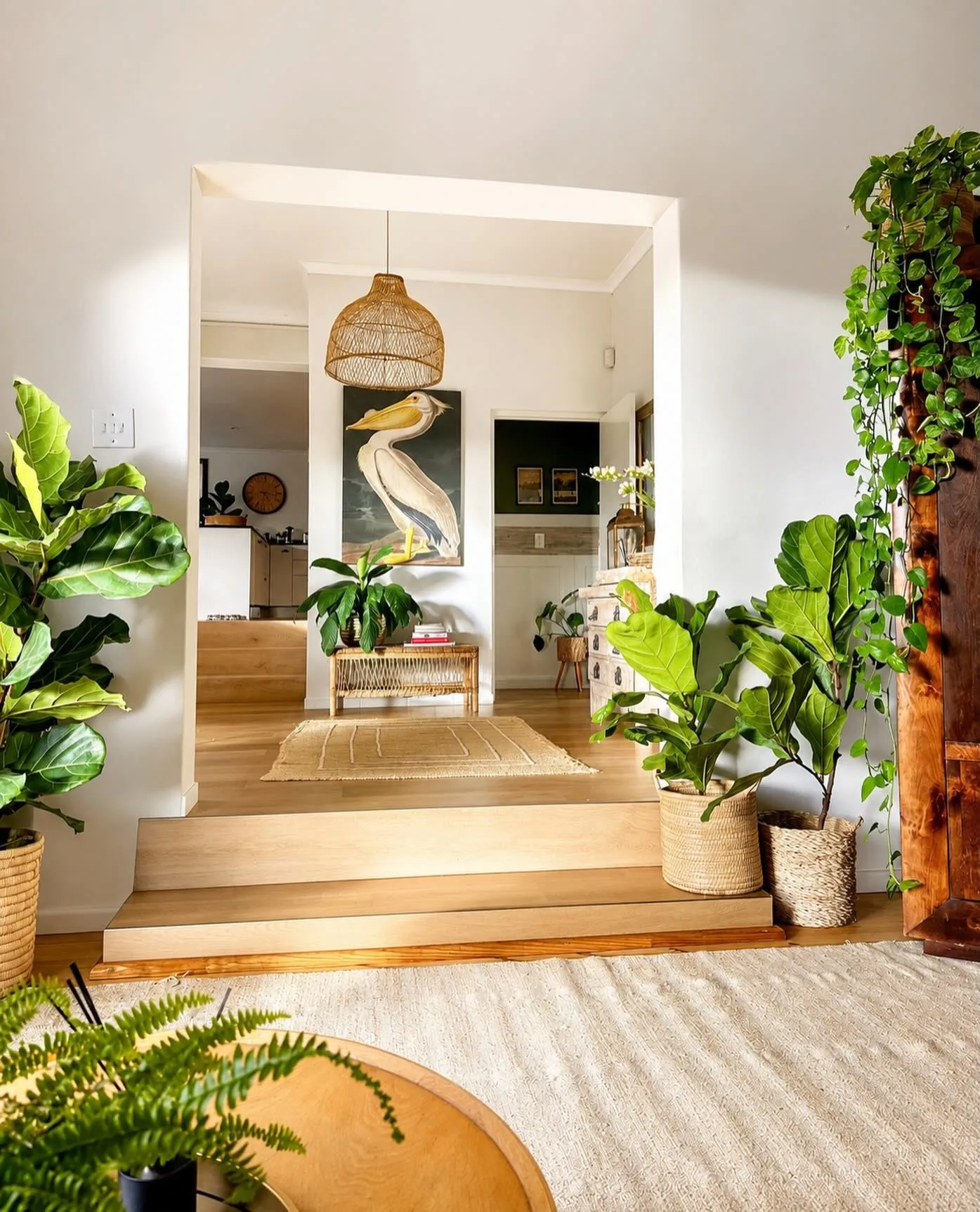
Cupboards, wardrobes and the garage come last, but they are not optional. Buyers open them, and a cupboard packed to the door says the house is short of storage. Aim for every cupboard to look as if it has room to spare. Moving clutter out of sight into them is one of the mistakes we see most, and it undoes the work you did on the surfaces.
Should I clean or declutter first?
Declutter first. You cannot clean a counter properly with eleven things on it, and every box you move leaves dust behind it. The Pam Golding guide pairs the two: declutter all areas of the home and spring clean rooms, carpets, furniture, curtains and linen, where possible. Clear a room, then clean it, then move on.
Where the gone pile goes in Cape Town
This is the part most decluttering advice leaves out, and the part that decides whether the gone pile actually leaves. The City of Cape Town's drop-off facilities page says it plainly:
The City's recycling and waste drop-off facilities offer residents free access to drop off recyclables, as well as bulky garage and garden waste.
The rules are on each site's own page. At the Hout Bay drop-off on Main Road, as we read it in November 2026:
- Cars, trailers or LDVs with a carrying capacity of up to 1,5 tons.
- A maximum of three loads a day of garage waste, builder's rubble and clean garden waste.
- No limit on the number of loads of recycling.
- Accepted: paper and cardboard, cans and metal, plastic, glass bottles, Tetra Pak, polystyrene, e-waste, motor oil, garage waste, clean builder's rubble and clean garden waste.
- Not accepted: organic kitchen waste and hazardous waste.
- Closed on Good Friday, Christmas Day and New Year's Day.
Two things to check before you load the car. Opening hours differ from site to site, so look up the one nearest you on the City's page. And the page does not say whether an old sofa or mattress counts as garage waste, so phone the City's enquiries line on 0860 103 089 before you drive it over. If you are clearing out over the December holidays, note the Christmas Day and New Year's Day closures.
Anything in good condition is better sold or given away than dropped off. Clothes, books, kitchenware and furniture all have a second life with someone, and the sooner they go, the sooner the spare room is a bedroom again.
When a second pair of eyes helps
Most of this you can do yourself over two or three weekends. The hard part is deciding what stays, because after a few years in a house you stop seeing it. That judgement is the work we do when we stage a home, and it is quicker for someone who has never lived there. If you would like us to walk through yours, send us the address and your listing date.
Frequently asked questions
What should I remove first when decluttering?
Whatever is on a flat surface. Counters, tables, bedside tables and the floor are what a camera and a buyer see first, so clear those before you open a single cupboard.
What is the hardest thing to get rid of when decluttering?
In our experience, sentimental things: photographs, children's artwork, inherited pieces. You do not have to decide about them now. Box them carefully for the next house. They belong in the packed pile, not the gone pile.
What are the biggest decluttering mistakes?
Moving clutter into cupboards and the garage, which buyers open. Keeping a "decide later" pile. And starting with the hardest room, so you run out of steam before the rooms buyers actually see.
What items are not worth moving?
Anything you would not unpack at the other end. If a box has stayed sealed since your last move, sell or give away what is in it, and recycle the rest.